
Diverse Spring Books for MLs

Spring is a great time to read books about the environment, animal and plant life cycles, and other outdoor topics. For English Language Learners (along with all students), it is important to read books with characters from diverse backgrounds. Try to integrate characters with similar backgrounds as the students you work with so that they can see kids that are similar to themselves in the books that they are reading and listening to. Here is a list of spring books to share with your students.
You can also read about spring themed activities to use with your students HERE.
Disclosure: This post contains Amazon affiliate links, which means I may receive a commission if you click on an Amazon link and make a purchase. This does not cost you any extra money.
Spring Books- Information

Señorita Mariposa– Follow the monarch butterflies on their journey from Mexico to Canada in this English-Spanish bilingual rhyming book.

In a Garden– Kids learn about how the plants in a garden grow with the poetry book full of beautiful illustrations.

Goodbye Winter Hello Spring– Learn about the transition from the snow of winter to the new growth of spring. This book has beautiful watercolor illustrations. It is about conversations between a child and the natural world.

A Butterfly’s Life Cycle (Explore Life Cycles)
This book gives a basic overview of a butterfly’s life cycle. It is part of a series of books that cover plant and animal life cycles. The pictures are brightly colored photographs that help this book to be appropriate for older ELLs that read on a lower reading level.

Everything Spring (Picture the Seasons)
This text in this book is simple but it integrates challenging vocabulary words. Students learn about the plants and animals of spring. The pictures are brightly colored photographs which helps this book to be appropriate for older ELLs that read on a lower reading level.

Up, Down, and Around
This book tells about how plants grow with simple language and many prepositions.
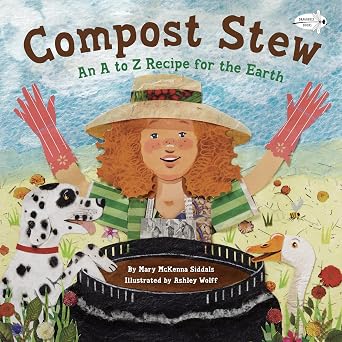
Compost Stew
Each letter of the alphabet is given an item that can go into compost. This is a great way for students to learn about what compost is and new vocabulary. As a follow-up activity, students can create their own “Compost stew” with different words, either individually taking one or two letters or attempting to do the whole alphabet. Students could also sort objects into those that can go into a compost and those that cannot.
Stories

Kite Flying– Follow a family as they build their own kite and then fly it.

Wangari’s Trees of Peace: A True Story from Africa
This book tells the story of Wangari who worked to plant trees and help the environment in Kenya. She won the Nobel Peace Prize for her work.

Who Likes Rain?
This book follows a child on a rainy as she discovers who likes and doesn’t like rain. The simple text has alliteration and lends itself well to making predictions.

Jayden helps his mom notice that there can be nature inside of the city by planting a community garden.

The Field
This book shows kids enjoying playing soccer. Creole words are mixed into the story, which takes place on St. Lucia in the Caribbean.

The Big Umbrella
This book using simple language to tell about a big umbrella that is large enough for everyone in the community to stay dry. It has a subtle message of inclusion. The book is a good mentor text for descriptive language and metaphors.