
Simple Strategies for Teaching Grammar to Multilingual Learners

Grammar is a set of rules that helps organize words into sentences so they make sense. It explains how words work together to form a clear meaning. Teaching grammar is a concept that is easy to skip over when there is a limited amount of time in your schedule.
Many native English speakers develop grammar skills naturally over time and can often tell if a sentence “sounds right.” However, this is not always the case for multilingual learners (MLs). The structure of a student’s home language may be very different from English. As a result, students may know the vocabulary but still produce sentences that sound “off” due to differences in grammar patterns.
Explicit grammar instruction is essential for multilingual learners. It helps them understand sentence structure, improve speaking and writing, and build confidence in English. Grammar instruction can also benefit native English speakers by strengthening reading comprehension and overall language skills.
1. Use Mentor Sentences to Teach Grammar
Mentor sentences are a powerful strategy for teaching grammar to ELLs. Start by choosing a specific grammar skill, such as verb tense or sentence structure.
- Show students a clear example sentence
- Discuss how the sentence is structured
- Have students create their own sentence using the same pattern
Using pictures alongside mentor sentences makes this strategy especially effective for multilingual learners. You can also find examples from picture books that students are familiar with.

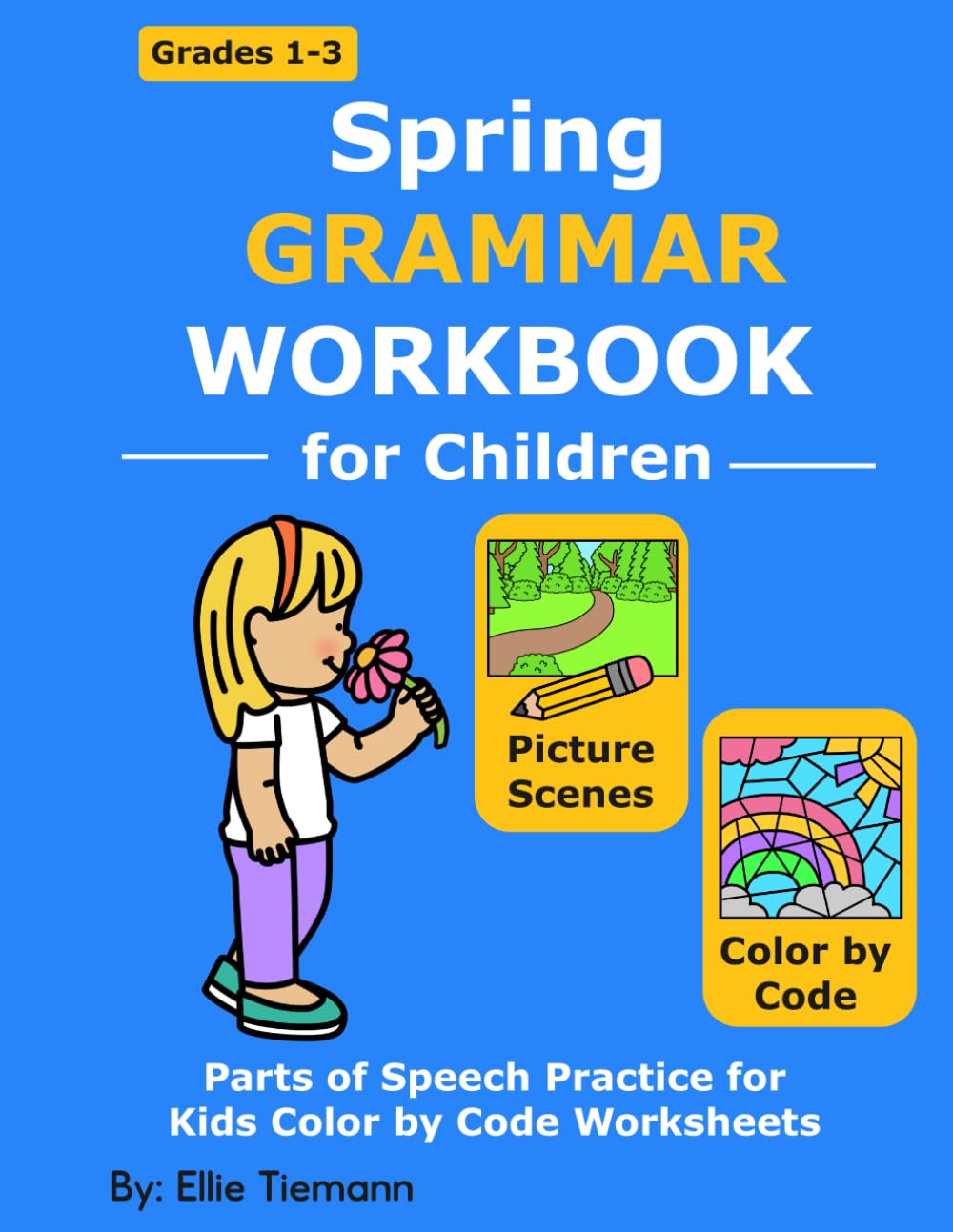
2. Introduce Parts of Speech with Pictures
Understanding parts of speech is a foundational skill for both vocabulary development and grammar. Teaching nouns, verbs, adjectives, and other parts of speech helps students build stronger sentences.
Try these engaging activities:
- Use posters and anchor charts for visual reference
- Incorporate worksheets and vocabulary games
- Have students go on a “word hunt” around the classroom or in books
- Sort words into categories (noun, verb, adjective, etc.)
- Use pictures to identify and label parts of speech
- Practice adding words into sentences to model correct grammar
These hands-on parts of speech activities are especially helpful for ESL and ELL students.

3. Use Sentence Frames to Model Gramatically Correct Sentences
Sentence frames are a helpful scaffold for multilingual learners. They provide a structure that helps students produce complete, grammatically correct sentences.
- A simple sentence frame may include one missing word
- Example: I see a ______.
- More advanced sentence frames may include multiple blanks
- Example: I see a ______ that is ______ because ______.
Sentence frames support both speaking and writing by reducing cognitive load.
Final Thoughts on Teaching Grammar to MLs
Teaching grammar to multilingual learners doesn’t have to be complicated. By using mentor sentences, explicitly teaching parts of speech, and incorporating sentence frames, you can make grammar instruction more accessible and effective.
These strategies help students move from understanding vocabulary to producing clear, grammatically correct sentences—an essential step in language development.
Resources for Teaching Grammar
Writing Lessons using Mentor Sentences


Grammar Picture and Reference Books
5 Tips for Teaching Grammar to ELLs
https://www.readingrockets.org/blogs/sound-it-out/can-teaching-grammar-benefit-reading-comprehension